Who is Eligible to Receive Zakat? Rules & Recipient Categories
Zakat is one of the Five Pillars of Islam, representing a mandatory charitable contribution for all eligible Muslims who possess wealth above a certain threshold (Nisab). While calculating Zakat is essential, ensuring that your Zakat reaches the correct, Shariah-eligible recipients is equally crucial. The rules of Zakat eligibility are strictly defined in Islamic jurisprudence to ensure wealth is redistributed to the most vulnerable members of society.
Giving Zakat to ineligible individuals or using it for unauthorized purposes invalidates the obligation. Therefore, donors must understand the categories of recipients who can rightfully receive these funds.
The 8 Categories of Zakat Recipients (Asnaf al-Zakat)
The Quran explicitly lists the eight categories of people entitled to receive Zakat in Surah At-Tawbah (Verse 60):
"Alms are only for the poor and the needy, and the officials appointed over them, and those whose hearts are made to incline (to truth), and the (ransoming of) captives, and those in debt, and in the way of Allah, and the wayfarer; an ordinance from Allah; and Allah is Knowing, Wise." (Surah At-Tawbah, 9:60)
Here is a detailed breakdown of these eight categories:
- Al-Fuqara (The Poor): Individuals who have no wealth or assets, or whose wealth falls far below the Nisab threshold. They cannot fulfill their basic daily needs like food, clean water, and shelter.
- Al-Masakin (The Needy): Individuals who possess some income or assets, but it is insufficient to cover their essential living expenses (e.g., medical costs, school supplies, or clothing). They are slightly better off than the Fuqara but still struggle constantly.
- Al-Amilina 'Alayha (Zakat Collectors): Trustworthy workers appointed to collect, manage, and distribute Zakat. Their salaries can be paid from Zakat funds for their administrative service.
- Al-Mu'allafati Qulubuhum (Reconciling Hearts): Historically, this category included new Muslims or individuals whose support was vital to protect the community. It represents using Zakat to support and strengthen faith.
- Fir-Riqab (Freeing Captives): Originally used to buy the freedom of slaves. In modern contexts, scholars apply this to helping free prisoners of war or individuals wrongfully detained under financial extortion.
- Al-Gharimin (Debtors): People burdened by overwhelming debts incurred due to necessity (e.g., medical emergencies, basic food, or business collapse). They can receive Zakat to clear their debts, provided the debt was not taken for unlawful (Haram) activities.
- Fi-Sabilillah (In the Cause of Allah): Those striving in the path of Allah. This traditionally referred to volunteers in defense of the community, and modern scholars extend it to support the propagation of Islamic knowledge and moral education.
- Ibnus-Sabil (The Wayfarer): Travelers who are stranded away from home and have run out of money, even if they are wealthy in their home country. Zakat can be given to cover their travel expenses to return home safely.
Who is NOT Eligible to Receive Zakat?
Shariah rules specify certain groups who cannot receive Zakat. Donating to them means the Zakat obligation is not fulfilled:
- Immediate Relatives: You cannot give Zakat to descendants (children, grandchildren) or ascendants (parents, grandparents) because you are already responsible for their maintenance. A husband also cannot give Zakat to his wife.
- The Wealthy (Sahib-e-Nisab): Anyone whose net assets exceed the Nisab threshold is not eligible to receive Zakat.
- Non-Individual Entities (Public Works): Zakat must be given to individuals (Tamleek). Using Zakat to build mosques, hospitals, roads, or schools is not permitted. Secular charities or administrative overhead of non-Zakat organizations cannot be funded by Zakat.
- Sayyids (The Descendants of Prophet Muhammad SAW): Members of the Hashimi family are traditionally barred from receiving Zakat to maintain the purity of the lineage. They should instead be supported through voluntary charity (Sadaqah/Hadiyah).
How IQRA Welfare Trust Distributes Zakat
At **IQRA Welfare Trust**, under the leadership of President **Munawwar Hassan** and Co-founder **Rashid Nadwi**, we maintain a strict verification policy to ensure your Zakat is distributed in complete compliance with Shariah guidelines.
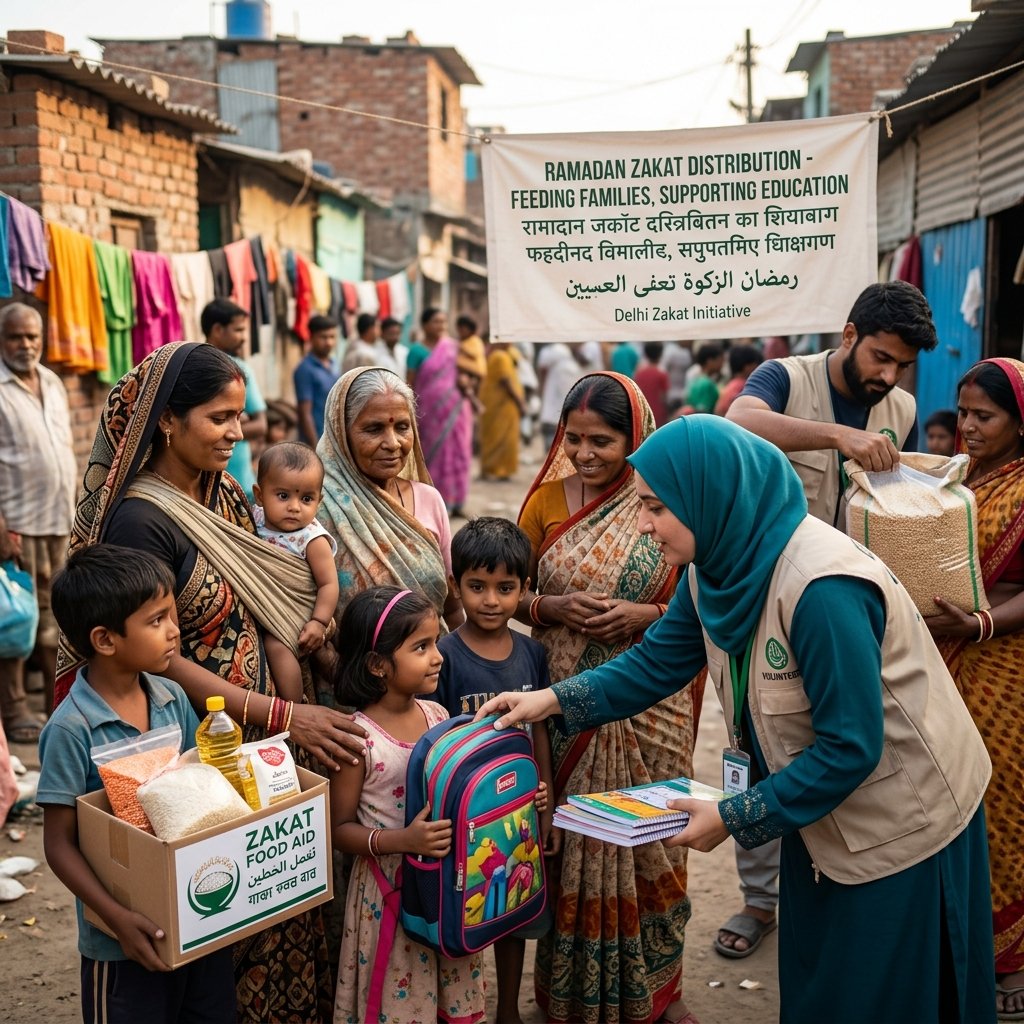
Our team conducts regular field visits in the slum clusters of **Madanpur Khadar**, **Okhla**, and **Shaheen Bagh** in Delhi NCR. We identify widows, orphans, disabled persons, and destitute families who fall under the categories of *Al-Fuqara* and *Al-Masakin*. The Zakat received is distributed directly to them in the form of cash aid for education, medical treatments, or essential food kits, ensuring proper transfer of ownership (Tamleek).
Donate Your Zakat to Verified Recipients
IQRA Welfare Trust ensures 100% transparent and Shariah-compliant Zakat distribution to poor families in Delhi NCR.
Donate Zakat OnlineZakat Eligibility FAQs
Yes. If your brother or sister is poor and meets the Zakat eligibility criteria (Fuqara/Masakin), you can give them Zakat. In fact, giving Zakat to eligible relatives yields double rewards—one for charity and one for maintaining family ties.
Zakat is a mandatory religious duty collected from wealthy Muslims and distributed exclusively to poor Muslims. However, you are highly encouraged to help non-Muslims who are in need using voluntary charity (Sadaqah, Hadiyah, or general donations).
Yes. Shariah rules require that Zakat funds must be transferred into the complete possession and ownership of the eligible recipient. This is why Zakat cannot be spent on building public structures or general administrative works that do not result in direct individual ownership.

Related Zakat & Charity Stories
How to Calculate Zakat on Gold, Cash & Property
A complete Shariah guide for Zakat calculations in India.
Read Guide
Best NGO in Delhi NCR for Online Zakat
Discover how we distribute Zakat transparently to local slums.
Read Story